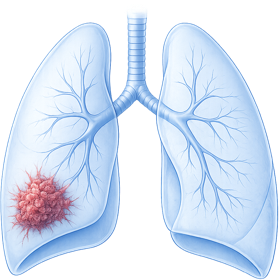
What it is
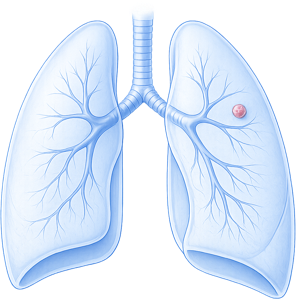
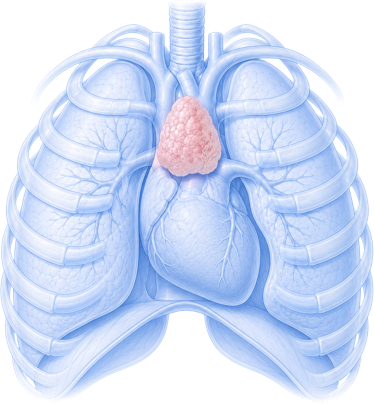
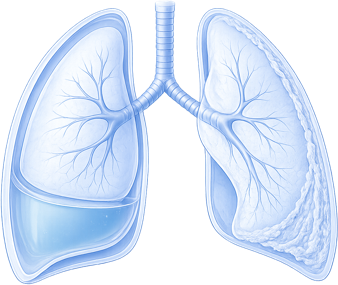
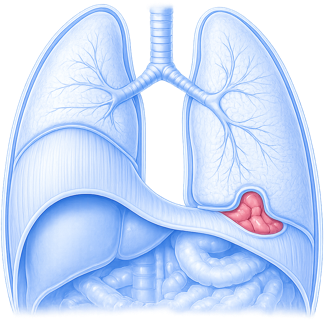
Lung cancer develops when abnormal cells grow uncontrollably within the lung. There are several different types, and treatment depends on the type of cancer, its location, whether it has spread and your general health.
When lung cancer is found at an early stage, it is often treatable with the aim of cure. For some very early lung cancers, long-term survival following surgery can exceed 90%. Finding the cancer early therefore makes a significant difference.
Common symptoms
Early-stage lung cancer often causes no symptoms. Many cancers that are suitable for surgery are discovered unexpectedly on a CT scan performed for another reason, or through lung cancer screening. When symptoms do occur, they may include:
- A persistent cough or a change in a long-standing cough
- Coughing up blood
- Persistent breathlessness
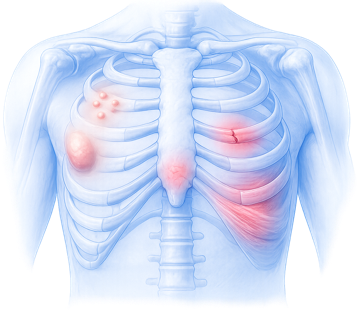
- Chest or shoulder pain
- Unexplained weight loss or loss of appetite
- Persistent tiredness or lack of energy
Treatment approach
Treatment depends on the type and stage of lung cancer, as well as your general health and individual circumstances. Options may include surgery, radiotherapy, chemotherapy, immunotherapy or a combination of treatments.
When surgery is appropriate, the cancer is usually removed with either a lobe of the lung (lobectomy), one or more segments (segmentectomy), or occasionally a smaller wedge of lung (wedge resection). Mr Harrison performs more than 95% of lung cancer resections using minimally invasive robotic or VATS (keyhole) techniques. In some circumstances, an open operation (thoracotomy) may be the safest or most appropriate approach.