What it is
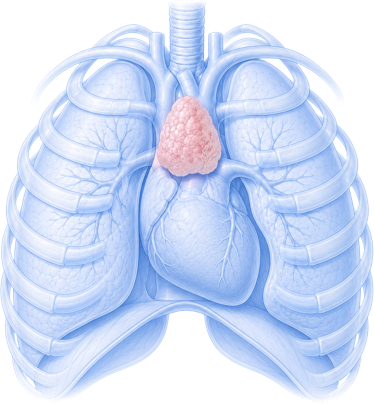
Mediastinal tumours are growths that develop in the central part of the chest. One of the most common is a thymoma, which develops from the thymus gland. Other conditions include thymic cysts, teratomas and enlarged lymph nodes, and not all mediastinal tumours are cancerous.
The thymus also has an important connection with myasthenia gravis, a condition that causes muscle weakness and fatigue. Some people with a thymoma develop myasthenia gravis, while in selected patients with myasthenia gravis but no thymoma, removal of the thymus (an extended thymectomy) can form an important part of treatment.
Common symptoms
Many thymomas and mediastinal tumours cause no symptoms and are discovered unexpectedly on a scan performed for another reason. When symptoms do occur, they depend on the size and type of the tumour and may include:
- Chest discomfort, cough or breathlessness
- A feeling of pressure or fullness in the chest
- Muscle weakness or unusual fatigue associated with myasthenia gravis
- Drooping eyelids or double vision
- Difficulty chewing or swallowing
Treatment approach
Your treatment will depend on the type, size and position of the tumour. For many thymomas and other mediastinal tumours, surgery is the main treatment. Mr Harrison performs most of these operations using robotic keyhole surgery through small incisions between the ribs, often avoiding the need for a larger operation through the breastbone.
For thymoma, the tumour and surrounding thymus gland are removed completely. An extended thymectomy can also be performed robotically for selected patients with myasthenia gravis. Larger or more complex tumours may still require open surgery to ensure they can be removed safely and completely.
Mr Harrison has also published research from Memorial Sloan Kettering Cancer Center on the development and outcomes of minimally invasive surgery for early-stage thymoma. Read the published research.