What it is
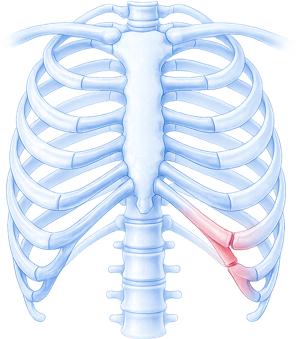
The lower ribs are connected by flexible cartilage, which normally keeps them stable while still allowing the chest to move. In slipping rib syndrome, this cartilage becomes unusually mobile, allowing one rib to move against or underneath the rib above and irritate the nearby nerves. This can cause sharp or catching pain, sometimes with a clicking or popping sensation, particularly with twisting, bending, coughing or certain movements.
Common symptoms
Because the pain can feel as though it is coming from the chest or upper abdomen, some patients have symptoms for months or years before slipping rib syndrome is recognised. Blood tests, chest or abdominal scans — sometimes looking for problems such as gallstones — may all have been normal. Patients commonly experience:
- Sharp or catching pain around the lower chest or upper abdomen
- Pain triggered by twisting, bending, coughing or certain movements
- A clicking, popping or slipping sensation around the lower ribs
- Tenderness over the affected rib
- Pain that may come and go or persist for long periods
Treatment approach
Slipping rib syndrome is usually diagnosed by listening carefully to your symptoms and examining the painful area. A dynamic ultrasound, which looks at how the ribs move, can sometimes help confirm the diagnosis.
If your symptoms continue to significantly affect your daily life, surgery can be used to repair and stabilise the affected ribs using a technique known as the Hansen repair. This involves making a small incision over the lower ribs and using strong stitches to secure the slipping rib in a more stable position. Some patients notice an improvement in their original pain straight away, although surgery can temporarily irritate the surrounding nerves and cause a flare in discomfort. This usually settles over the following 2–4 weeks as the area heals.
Protecting the repair while it heals is important. You will be advised to avoid any movements, lifting and exercise that place strain on the lower ribs for the first 6–8 weeks, allowing the repair time to heal and strengthen.